Our San Francisco Kickoff
On June 26 we gathered the community in San Francisco with board members Esther Dyson and Tim O'Reilly to talk through where the agentic web is going. Watch the recording, or read the recap below.
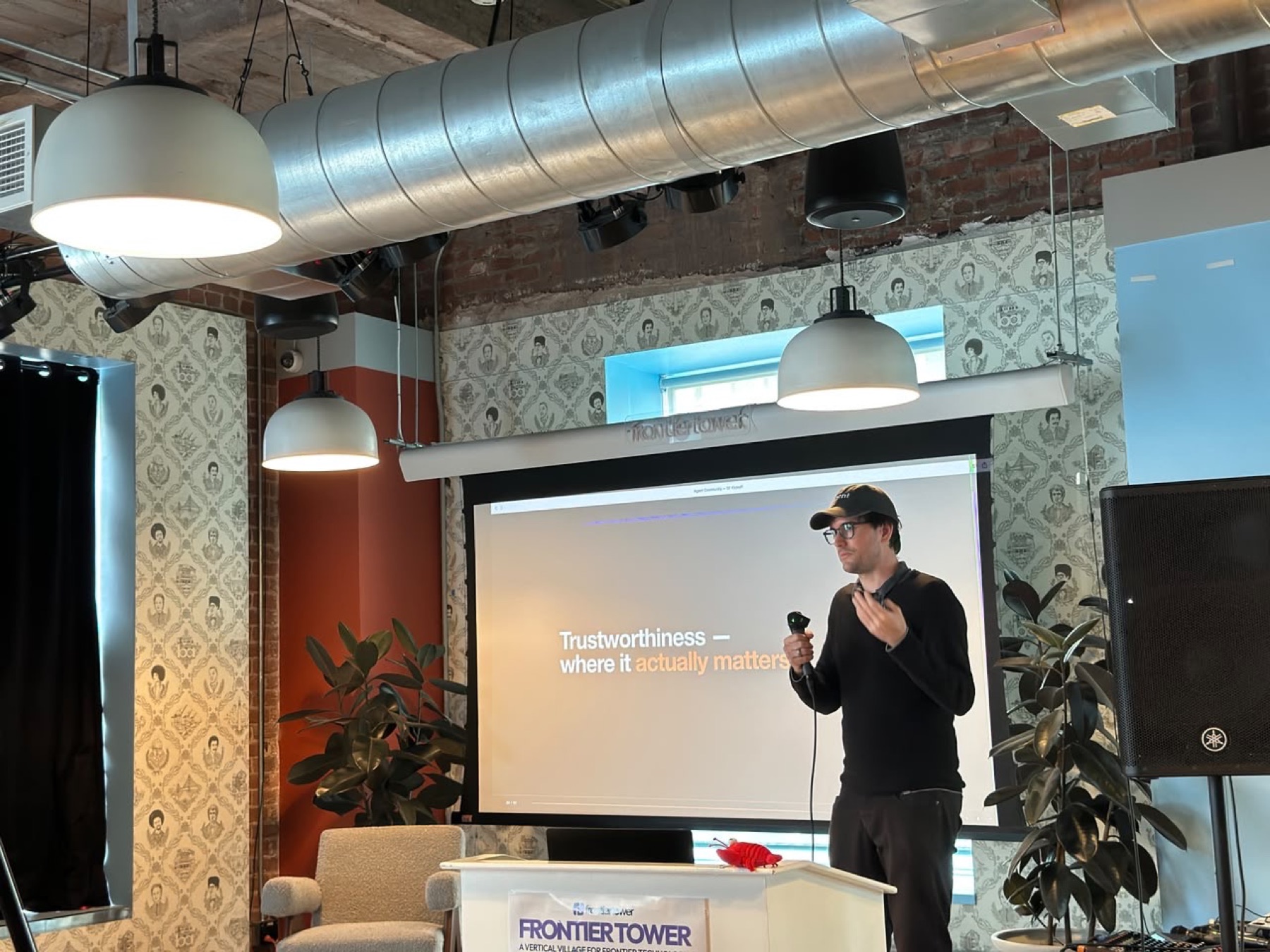
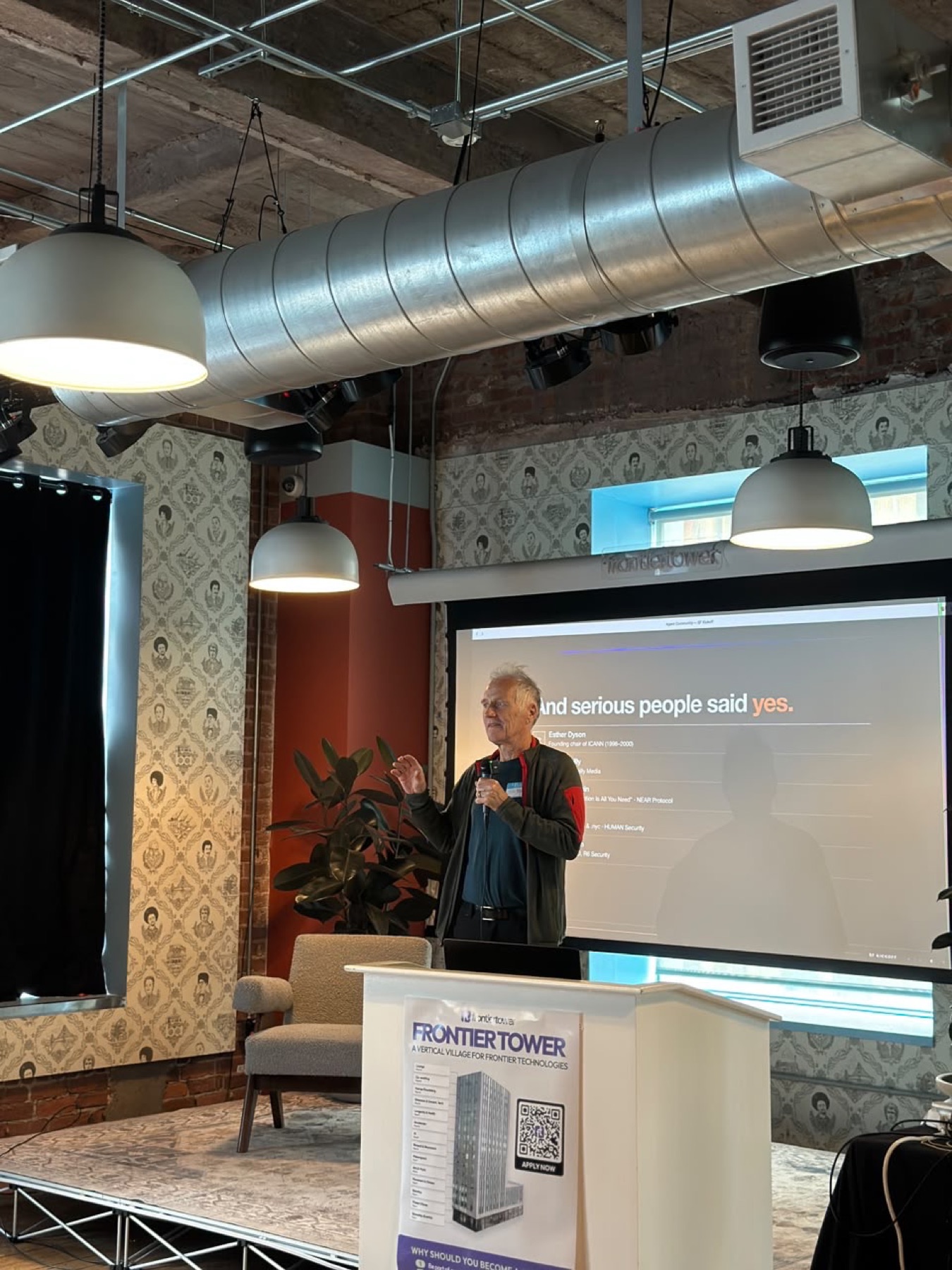
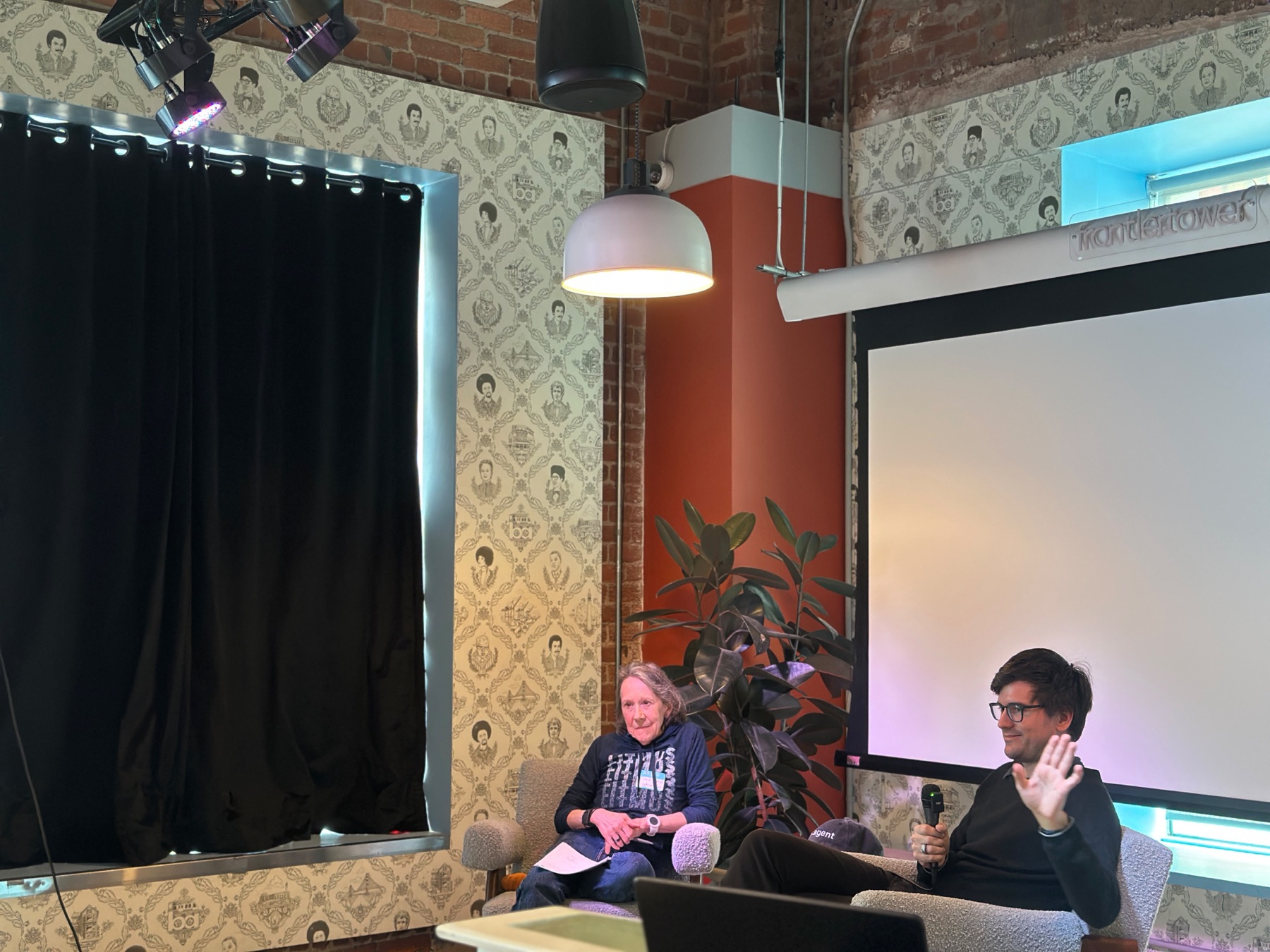
On Friday, June 26, we held our first major Agent Community event in San Francisco. More than 500 people signed up, and for three hours we got into the question I actually care about: where the agentic web is going, and what it needs from us to get there. I was joined on stage by two of our board members, Esther Dyson and Tim O'Reilly. The full recording is above. Below is a summary of most of what we said, so you do not have to sit through two hours to get it.
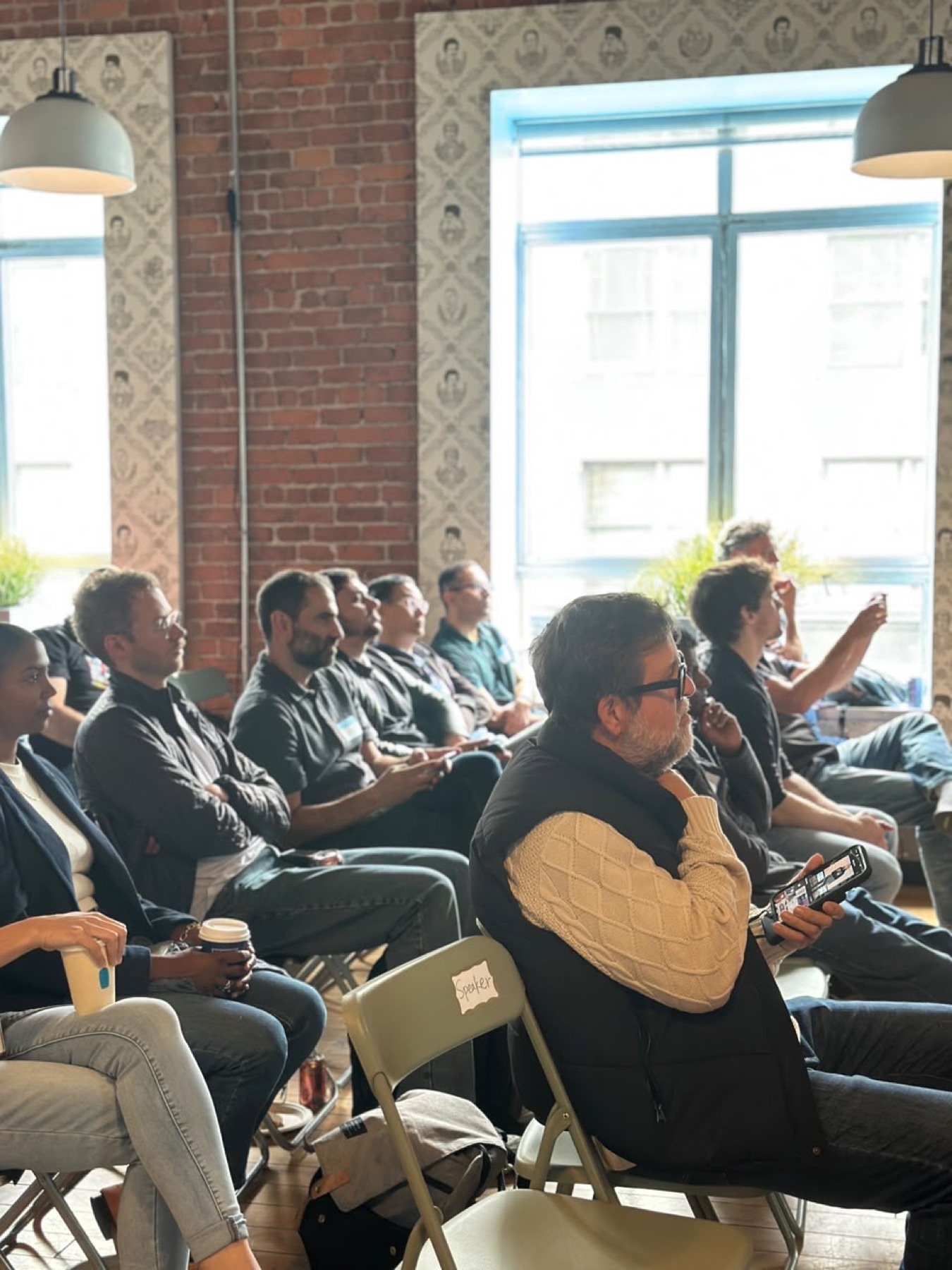
The room
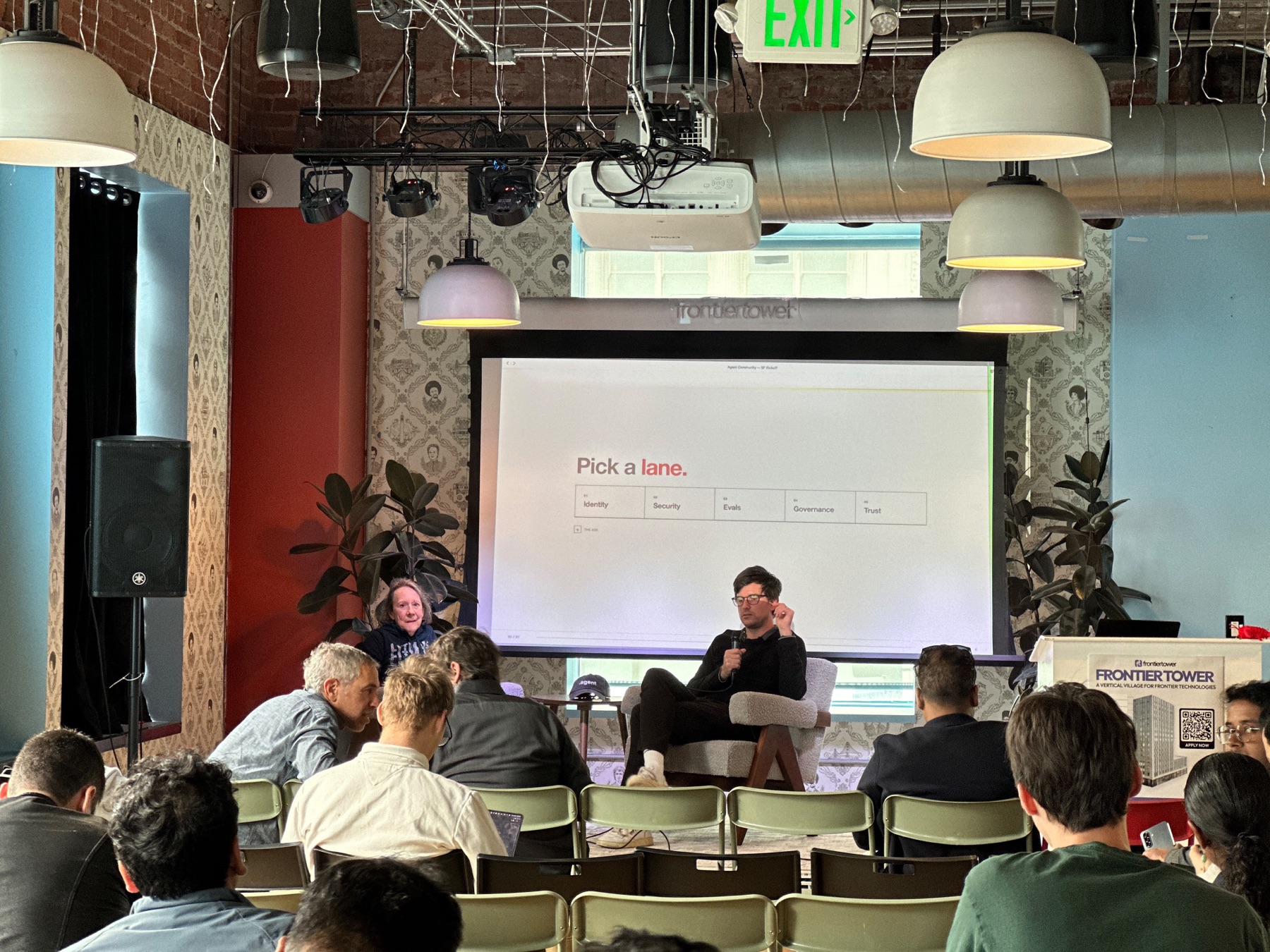
We had an amazing crowd, mostly agent builders who think hard about how the agent economy will actually work. We kept it simple, with bagels, coffee, and a long open conversation. The questions were the best part. People came with a deep understanding of the problem and pushed on the parts that are not solved yet: where we are today, what is still missing, and what it takes to keep a namespace like .agent open and community governed.
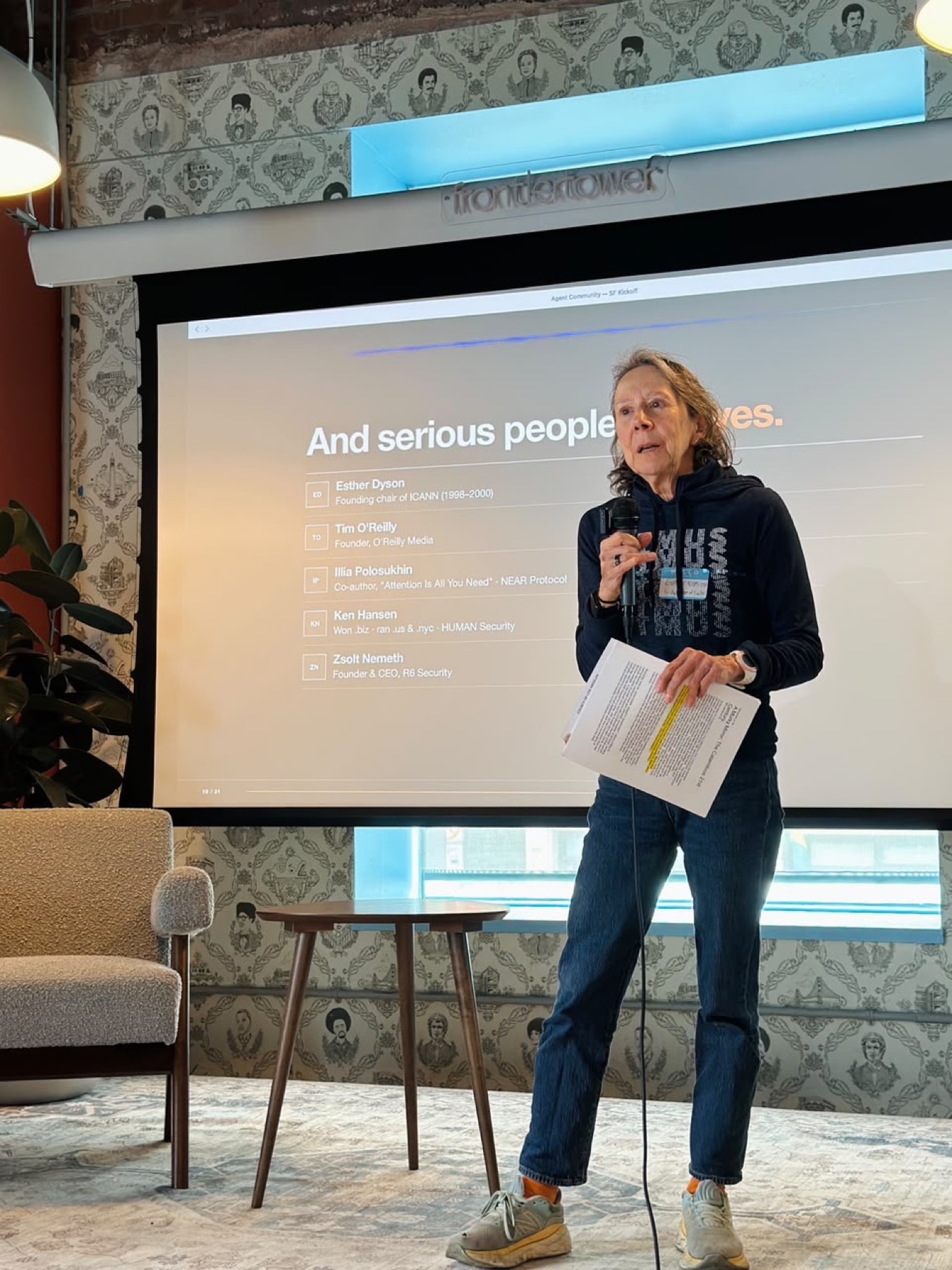
Who spoke
All three of us are on the Agent Community board and team. The full bios are on the team page.
- Balázs Nemethi, Founder of Agent Community. LinkedIn
- Esther Dyson, founding chair of ICANN (1998–2000), longtime technology investor and author. LinkedIn
- Tim O'Reilly, Founder and CEO of O'Reilly Media. LinkedIn
How we got here
The whole .agent idea started because a domain did not exist. In the second half of 2024 I built a CV optimizer "agent" for some friends and went to register something on .agent. There was no .agent. So I went to find out what it would take to create it.
New top-level domains are managed by ICANN, and the normal path easily leads to a public bidding war if there is more than one application. Whoever pays the most wins. It was clear that this domain would have competition, so the "normal" path wasn't available for us. Then I found a process called the Community Priority Evaluation. TLDR: if you qualify as a real community and score 12 of 16 points, the namespace goes to the community instead of the highest bidder. That is also why we are called Agent Community. The name itself is part of the case.
There is a clock on this. The last time ICANN opened applications was 2012, fourteen years ago. The current window closes on August 12, and we will submit before then.
After that discovery of CPE, there was a lot of unglamorous work. The first site was agentdomain.xyz. Someone with a real following tweeted about it and we got around a thousand signups in a day, then it crawled. We went from roughly one thousand to three thousand over six months, one conversation at a time. Along the way we shipped the parts the application actually needs: an endorsement letter members can sign, a public community, and the AID spec, which is a DNS based way for an agent to publish where its endpoint lives and a key to prove it.
Then Brave happened. They tweeted about us, and it almost broke our servers. Over the following five or six days we got more than two million site views.
Here is the full deck if you want to flip through it yourself.
Use the arrows or click to move through it, and press F for full screen.
What Esther and Tim brought
Esther helped start ICANN and was its founding chair, so when she talks about what a top-level domain can and cannot do, she knows what she is saying. Her point was simple. A .agent name should mean something. It should point to a person or company that is accountable and liable for what their agent does. She was also clear that we cannot do this alone. We need insurance companies, lawyers, validators, and plain skeptics around us for the name to carry real trust, and she likes that a good insurance company is judged as much by who it turns down as by who it covers.
Tim has watched this industry for forty five years, and he kept returning to the power of namespaces, something he thinks people badly underestimated in the early internet. His worry is concentration. He called this the most unprecedented race for monopoly he has seen, and he put the choice as two doors. Behind one, the namespace gets bought by someone with deep pockets and used for control and profit. Behind the other, it becomes a public good.
In their words
The goal here is to make a .agent name valid and valuable, a sign of integrity, and most importantly a pointer to a person or entity that is accountable and liable for the behavior of that agent.
Esther Dyson, founding chair of ICANN (1998–2000)
What we do not want is the world of agents to get a bad rep for being uncontrolled, unaccountable scam artists... We need third parties: insurance companies, lawyers, validators, skeptics, to make sure that the .agent top-level domain actually means something.
Esther Dyson, founding chair of ICANN (1998–2000)
We're in the most unprecedented race for monopoly that I've ever seen. Everybody else kind of got an accidental monopoly; these guys set out from the very beginning to own the future, and this is a piece of owning the future, heading into a period of unprecedented concentration of power with a very small number of companies.
Tim O'Reilly, Founder, O'Reilly Media
This is likely to get bought by somebody with very deep pockets who'll use it as another tool for control and extractive profits, or it could be a public good. If there's anything I can do to help that door win, I ought to do it. And so should you.
Tim O'Reilly, Founder, O'Reilly Media
The questions that came up
The Q&A ran for more than an hour, and it was the sharpest part of the morning. A few threads stood out.
Accountability. The model an agent runs on, its harness, its environment, and its context can all change. What stays constant is the entity behind it and the endpoint it speaks through, so that is what we want to verify. If your agent uses an endpoint that is registered to you and it makes a mistake, that is on you. You can run it in yolo mode if you want, but you gave it the right to act. The upside is the same mechanism in reverse: a registered, recognized agent becomes a legal representative of your actions, which is the entire point.
People asked what happens when trust is broken. Domain owners become voting members, there is a board, and there has to be a way to turn off resolution for a name that stops meeting the requirements. Verification is not a one time check at signup. It has to become an ongoing process.
Has anyone done this before? Yes. .edu is limited to accredited universities, .gov to government, .coop to actual cooperatives. .org was meant to be nonprofit, drifted, and a couple of years ago was nearly sold to private equity, which is part of why Esther got pulled back into this world. None of these are perfect, but they show that a restricted, meaningful namespace is possible.
Jurisdiction was a recurring worry. We cannot control what every country does, and we are not the police. Estonia launched an agent identity scheme two weeks ago built on its national eID, so some of this is already moving. One idea we are exploring is reserving country codes like eu.agent or us.agent and only releasing them once a country has real rules for agents, for example a requirement to host inside the EU.
Money came up too, because people wanted to know how any of this gets funded. Premium English words like search.agent or health.agent would likely go to a special process, and revenue from these mechanisms would pay for the verification work rather than a private shareholder. Buying a domain should not buy you the rules.
A few people pushed on the hard edges. Lookalike names are a real attack, like the fake Polymarket account that swapped a capital I for a lowercase l. Access is uneven around the world, so we expect tiers, including a lighter verified tier, drawing on identity work I did earlier with refugees. And on pre-registration we are making no promises, because until we are actually granted the registry we cannot act like one.
What happens next
We submit the community application to ICANN by August 12, the first new top-level domain window since 2012. After that comes a few quiet months until the reveal day, when ICANN publishes the applications it received. Because we are applying as a community, .agent would then go through an evaluation scored against ICANN's criteria, where the bar is 12 of 16 points. If we clear it, the registry agreement and a public launch come later. None of this is guaranteed. It is an application, and ICANN moves slowly.
In the meantime the five workstreams start soon as open mailing lists and a Discord: Security, Identity, Evaluation, Governance, and Trust. They are not trying to write new standards from scratch. They are for collecting best practices and moving fast on the things that matter, starting with agent security. If you want to help lead one, that is the door in.
Resources
Come to the next one
This was our first in-person event, and it will not be the last. We run things online and in person, and we will keep doing it. The fastest way to be part of the next conversation is to join the community and put your organization on the map.
Thank you to everyone who came, and to everyone building this with us. See you at the next one.
Note added 26 July 2026. If you found this looking for what the community is beyond the events and the application, that is written down now: what Agent Community is.